Production hall lighting: LED design and installation
We design and install production hall LED lighting around workstations and production lines. Machinery layout, work tasks, shifts and installation access guide the project.
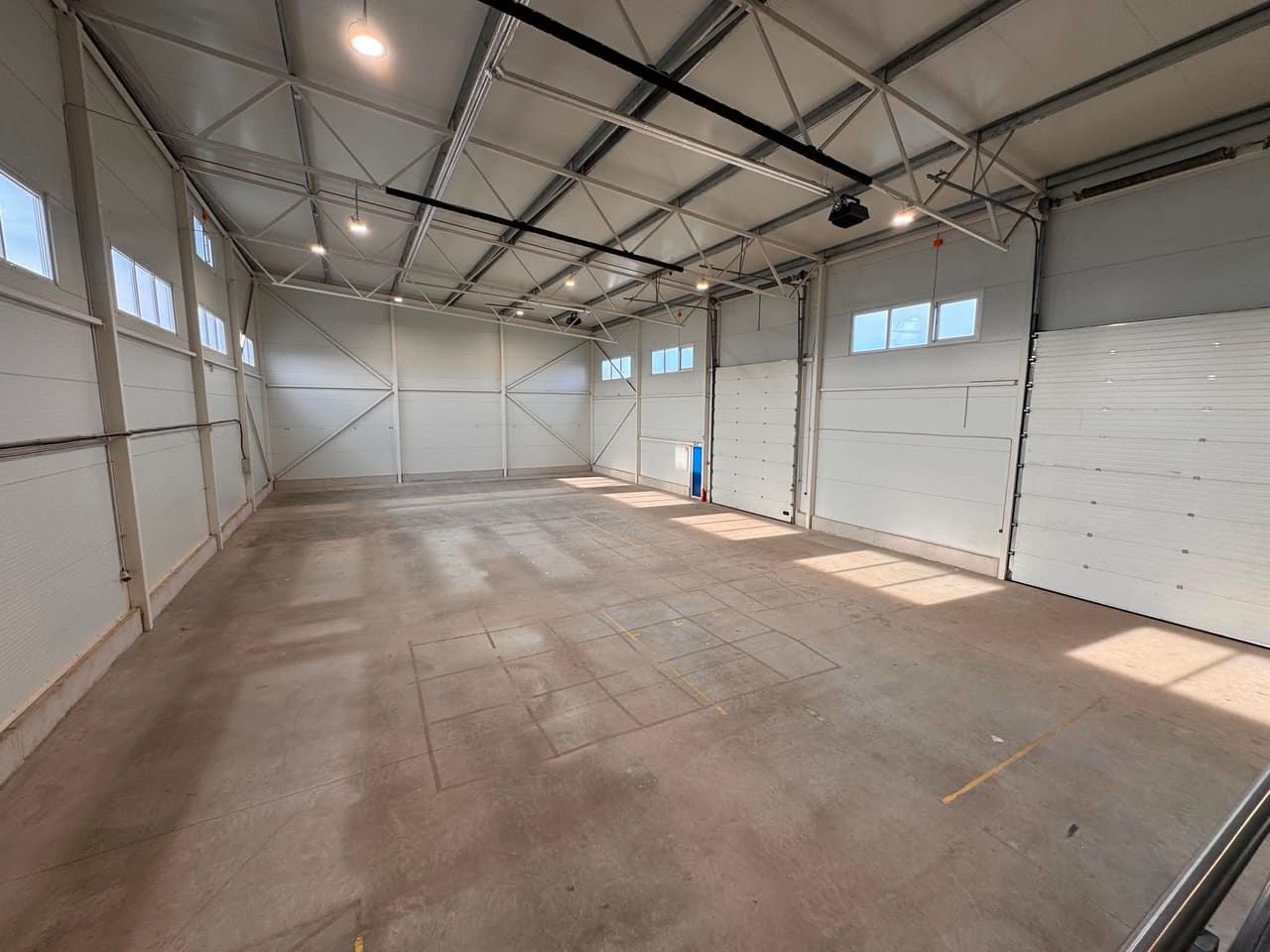
Production lighting planned around workstations and tasks
Machining, assembly and quality inspection need separate consideration. We establish where people work, what they need to see and how machinery affects fixture placement.
A lighting upgrade starts with the production floor plan and existing fixtures. We clarify workstation locations and planned changes to production lines so the lighting design reflects how the space is used.
Production hall lighting is part of our wider industrial and office lighting service. We design, install and hand over the measurement reports needed for the use permit and audit.
Production lighting requirements: how many lux a production hall needs (EVS-EN 12464-1)
Every production area needs its own light level. The EVS-EN 12464-1 standard sets the lighting requirements for workplaces, and we design production lighting to it, by area and task: machining, assembly, inspection and the operator station. The table below gives typical target values; the exact solution comes from a lighting calculation.
| Production area / task | Illuminance Ēm (lux) | UGR (glare) | Ra (colour rendering) |
|---|---|---|---|
| Rough work, welding | 300 | 25 | 60 |
| General machining and assembly | 300 | 22 | 80 |
| Fine assembly | 500 | 19 | 80 |
| Precision work and inspection | 750 | 19 | 80 |
| Colour inspection, colour matching | 1000 | 16 | 90 |
| Control room, operator station | 500 | 19 | 80 |
| In-process storage and packing | 200 | 22 | 80 |
| Aisles and circulation | 150 | 25 | 40 |
Ēm is the maintained illuminance. Exact requirements depend on the current edition of EVS-EN 12464-1 and the nature of the work; we verify them in the lighting design.
Which luminaires suit a production hall
High-bay luminaire
High-output LED luminaire for tall production halls, even general lighting across the whole hall.
Line and linear luminaire
A continuous strip of light above production lines and workbenches, even light without shadows.
Flicker-free LED
Light without flicker, which avoids the stroboscopic effect on rotating machinery and reduces eye strain.
Task and precision lighting
Directed extra light at assembly, inspection and precision stations that need more lux.
IP65, ATEX and hygienic
Suitably rated luminaires for dusty, damp, explosive and food-industry rooms.
Design + measurement reports
Lighting calculations, as-built drawings and measurement reports for the use permit and audit.
The production-specific factors we account for
Flicker and the stroboscopic effect. Flickering light can make a rotating machine or tool appear to stand still, which is a serious accident risk. We use flicker-free LED drivers that eliminate the stroboscopic effect and also reduce eye strain over a shift.
Uniformity and shadows. Around moving machinery and workbenches the light has to be even, with no dark spots or hard shadows. We calculate the fixture layout so that workstations and walkways are lit evenly.
Colour rendering and inspection. In quality and colour inspection the colours have to be judged correctly. There we design for high colour rendering (Ra 90+) and a higher light level; for general production Ra 80 is enough.
Environment. Dust, welding fumes, moisture, chemicals and food hygiene place special demands on the fixture. We choose the protection rating (IP65 or higher), an ATEX certificate or a shatter-proof hygienic luminaire based on the site.
How production lighting saves energy
When estimating energy use, we distinguish between general hall lighting and individual workstation lighting. Shift schedules show which lines operate together and which areas are unused for part of the day.
We compare the power and operating hours of the existing and proposed fixtures. Control options are assessed by production line and workstation, with savings estimates based on site data.
Who production lighting is for
- Production and industrial companies that want even, safe light
- Metal, wood and plastics industries
- Food and packaging industries with hygiene requirements
- Assembly plants and manufacturing lines
- Developers and construction companies for new production buildings
The production lighting project process
Site survey
We review the hall: ceiling height, line and workstation layout, tasks and environment.
Lighting calculations
We calculate the illuminance level (lux) by area and task and select the fixtures.
Design and quote
We prepare the lighting design, an energy estimate and a clear quote.
Installation
We agree the installation stages, site access and any required shutdowns before work starts.
Measurements and handover
We carry out the measurements and hand over the reports and as-built drawings.
Preparing your lighting project
Before preparing a quote, we review the existing lighting, building plan and operating schedule. These define the scope of design, installation and documentation.
Maardu port lighting project
Read about the lighting upgrade in the Maardu port area on our completed projects page.
Production hall lighting, FAQ
It depends on the task. Rough work and welding around 300 lux, general machining and assembly around 300 lux, fine assembly 500 lux, precision work and inspection 750 lux, and colour inspection up to 1000 lux. The values come from EVS-EN 12464-1; we calculate the exact level from the workstation and the task.
Flicker-free lighting does not flicker imperceptibly to the eye. In production it is a safety issue: under flickering light a rotating machine or tool can appear to stand still (the stroboscopic effect), which is an accident risk. We choose flicker-free LED drivers, which also reduce eye strain over a shift.
For ordinary work Ra 80 is enough, but for colour and quality inspection, where colours must be judged correctly, we use Ra 90 or higher and up to 1000 lux. We design the inspection-area lighting specifically for that task.
Yes. For food production and washable rooms we install high-rated (for example IP65 or IP69K) and shatter-proof luminaires that withstand washdown, moisture and hygiene requirements. We choose the solution based on the room's requirements.
Yes. For explosive zones, for example certain chemical, wood-dust and paint areas, we install ATEX-certified luminaires. We choose the protection rating and zone class based on the site environment.
Installation can be planned by line or work area where production operations allow it. Before work starts, we agree access above machinery, suitable working times and any required shutdowns.
Payback depends on the power of the existing and proposed fixtures, operating hours, electricity price and project cost. The calculation needs details of your current lighting and operating schedule. Savings at another site do not predict your warehouse or production hall results.
See also
Industrial & office lighting
The full lighting service: production halls, commercial buildings, offices and car parks, from design to installation.
See the serviceWarehouse lighting
High-bay, rack-aisle and cold-store lighting for warehouses and logistics buildings.
See the serviceDocumentation & audit
Measurement reports, as-built drawings and the documentation required for the use permit.
See the serviceAsk for a production hall lighting quote
Send the production hall location, a plan or dimensions, machinery and workstation layout, and a description of the tasks. Include fixture mounting height, photos of current lighting and shift schedules. Tell us when installation access is available and which shutdowns are possible.