Warehouse lighting: LED design and installation
We design and install warehouse LED lighting for rack aisles, picking areas and loading zones. The layout of the racking, fixture mounting height and operating hours guide the design.
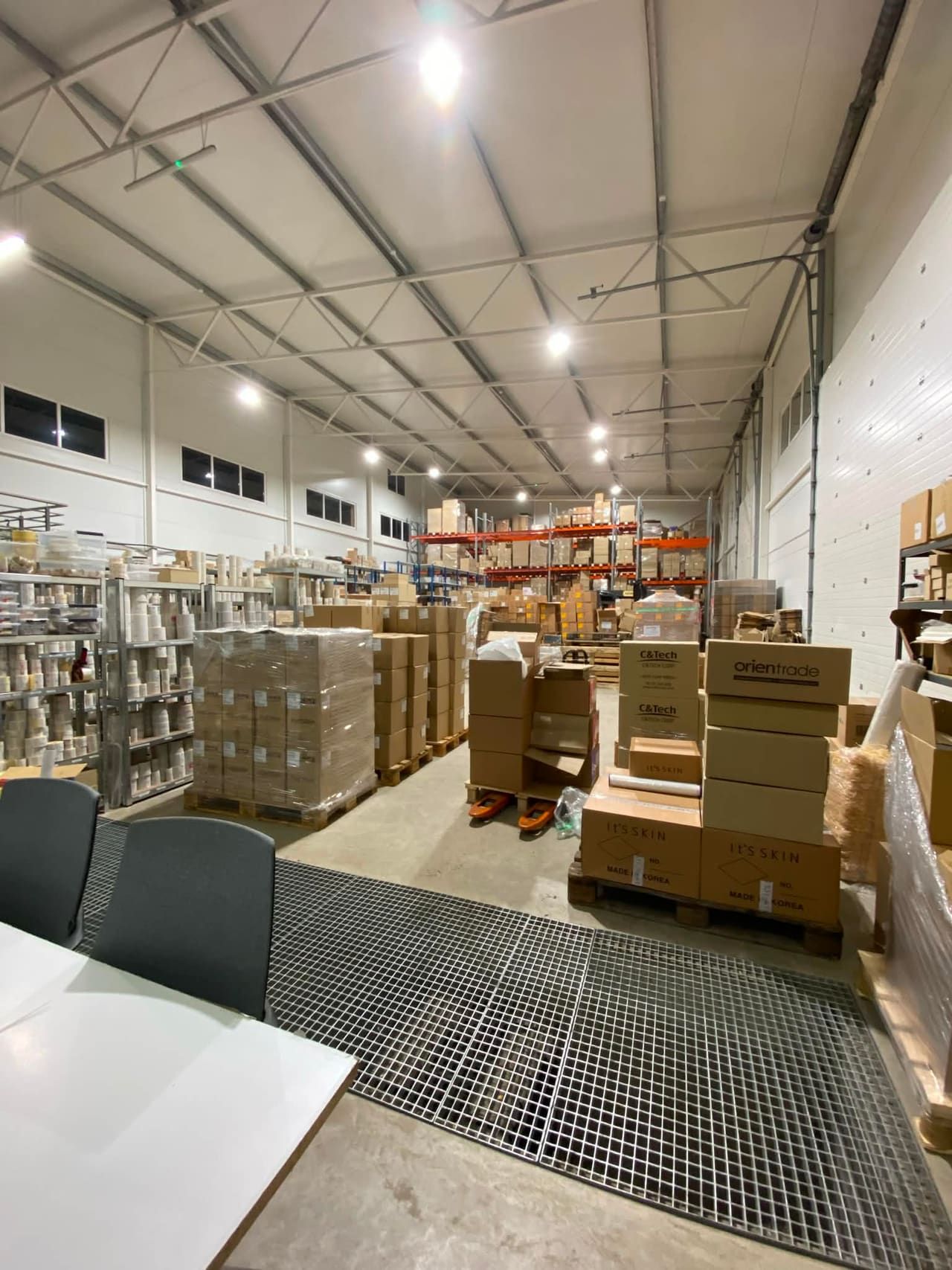
Warehouse lighting planned around racks and aisles
Rack height and aisle width affect fixture placement. We review storage, picking and loading areas separately because each involves different tasks.
When planning a lighting upgrade, we compare the existing fixture layout with the warehouse plan. Changes to racking or warehouse use may also call for changes to fixture positions and controls.
Warehouse lighting is part of our wider industrial and office lighting service. We design, install and hand over the measurement reports needed for the use permit and audit.
Warehouse lighting requirements: how many lux a warehouse needs (EVS-EN 12464-1)
Every warehouse area needs its own light level. The EVS-EN 12464-1 standard sets the lighting requirements for workplaces, and we design warehouse lighting to it, area by area: storage, picking, loading area, packing, quality control and cold store. The table below gives typical target values; the exact solution comes from a lighting calculation.
| Warehouse area / task | Illuminance Ēm (lux) | UGR (glare) | Ra (colour rendering) |
|---|---|---|---|
| Warehouse, occasional traffic (storage only) | 100 | 25 | 60 |
| Warehouse, continuous work / picking | 200 | 25 | 60 |
| High racking, rack aisles | 200 | 22 | 60 |
| Loading area, ramps | 150 | 25 | 40 |
| Packing and labelling | 300 | 25 | 80 |
| Quality control and receiving | 500 | 22 | 80 |
| Cold store, freezer store | 100–200 | 25 | 60 |
| Warehouse office, computer work | 500 | 19 | 80 |
Ēm is the maintained illuminance. In high racking the vertical illuminance on the rack face also matters, so labels and goods stay readable. Exact requirements depend on the current edition of EVS-EN 12464-1 and how the space is used; we verify them in the lighting design.
Which luminaires suit a warehouse
High-bay luminaire
High-output LED luminaire for warehouses over 6 m tall. Gives even light down the rack aisles.
Linear luminaire for rack aisles
Even lighting along the full length of narrow and lower rack aisles.
Moisture- and dust-proof (IP65)
IP65 or higher rated luminaires for cold stores, damp and dusty rooms.
Motion sensors and zone control
Light runs at full output only where work is happening, which cuts energy use significantly.
Emergency and escape lighting
Escape-route lighting and exit signs to the EVS-EN 1838 standard.
Design + measurement reports
Lighting calculations, as-built drawings and measurement reports for the use permit and audit.
The warehouse-specific factors we account for
Tall racking and narrow aisles. In a high warehouse, lighting the floor is not enough; the light has to reach the rack faces so labels and goods stay readable. We calculate the fixture placement and aiming so that no shadows or dark spots form in the aisles.
Cold store and freezer store. LED suits cold environments well, because low temperature tends to raise light output and lifetime. It is important to choose cold-rated drivers and a sufficient protection rating so that condensation and moisture don't damage the fixture.
Dust, moisture and washdown. For dusty and damp warehouses and washable areas we choose IP65 or higher. For explosive zones we install ATEX-certified fixtures.
Operating hours and maintenance. Tell us when each warehouse area is used and how fixtures can be reached for maintenance. We agree the installation schedule around warehouse operations.
How warehouse lighting saves energy
An energy estimate needs fixture power ratings and operating hours. For rarely used aisles, we review motion sensors and zone controls; near windows, we consider daylight control.
We compare the current lighting with the proposed system using your actual operating schedule. Lighting calculations guide fixture numbers and placement; the savings estimate depends on site data.
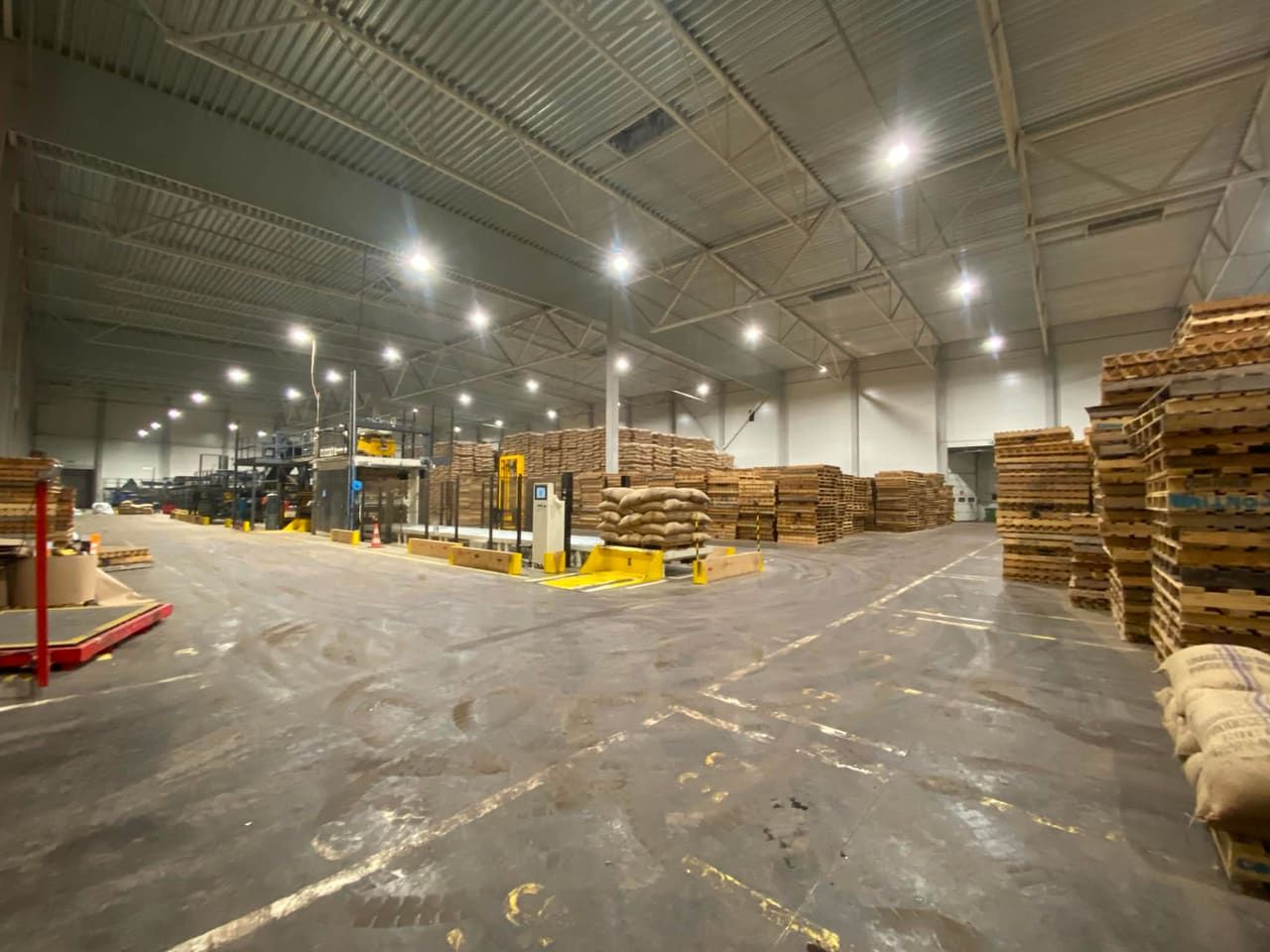
Who warehouse lighting is for
- Owners and managers of warehouse and logistics buildings
- Operators of cold stores and freezer stores
- Manufacturers with their own warehouse space
- E-commerce and retail distribution centres
- Developers and construction companies for new warehouse buildings
The warehouse lighting project process
Site survey
We review the warehouse: ceiling height, racking layout, aisle width and use.
Lighting calculations
We calculate the illuminance level (lux) area by area and select suitable fixtures.
Design and quote
We prepare the lighting design, an energy estimate and a clear quote.
Installation
We agree the installation stages, site access and any required shutdowns before work starts.
Measurements and handover
We carry out the measurements and hand over the reports and as-built drawings.
Preparing your lighting project
Before preparing a quote, we review the existing lighting, building plan and operating schedule. These define the scope of design, installation and documentation.
Maardu port lighting project
Read about the lighting upgrade in the Maardu port area on our completed projects page.
Warehouse lighting, FAQ
It depends on the task. A warehouse with occasional traffic around 100 lux, continuous picking around 200 lux, packing and labelling around 300 lux, and quality control and receiving 500 lux. The values come from EVS-EN 12464-1; we calculate the exact level from how the space is used.
A high-bay is a high-output LED luminaire for tall spaces, typically warehouses over 6 m ceiling height. It gives even light down the rack aisles. Lower spaces and narrow aisles suit linear luminaires that light the full length of the aisle evenly.
LED suits cold environments well, because low temperature tends to raise LED light output and lifetime. The key is to choose cold-rated drivers and IP65 or higher rated luminaires so that condensation and moisture don't damage the fixture. We design the cold-store lighting specifically for that environment.
Yes. For dusty, damp and washdown warehouses we install IP65 or higher rated luminaires, and for explosive zones (for example certain chemical and dust warehouses) ATEX-certified luminaires. We choose the rating based on the site environment.
Savings depend on how long the rack aisles are in use and how the lighting is currently controlled. We compare fixture power and operating hours before and after the proposed change to estimate the difference.
Installation can be planned zone by zone where warehouse operations allow it. Before work starts, we agree which areas will be clear, access for lifting equipment and any required interruptions.
Payback depends on the power of the existing and proposed fixtures, operating hours, electricity price and project cost. The calculation needs details of your current lighting and operating schedule. Savings at another site do not predict your warehouse or production hall results.
See also
Industrial & office lighting
The full lighting service: production halls, commercial buildings, offices and car parks, from design to installation.
See the serviceDocumentation & audit
Measurement reports, as-built drawings and the documentation required for the use permit.
See the serviceProduction hall lighting
Flicker-free machining, assembly and inspection lighting for production halls.
See the serviceAsk for a warehouse lighting quote
For a quote, send the warehouse location, a plan or dimensions, racking layout and fixture mounting height. Include operating hours, photos of existing fixtures and details of installation access and available times. We use these to clarify the scope of work.